Keynotes
Speakers (in alphabetical order)
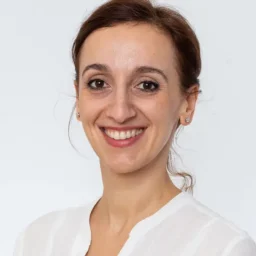
Prof. Vasiliki Kosta
Universiteit Leiden (NL)Academic freedom in EU law and the commercialisation of academia
The content of academic freedom as protected in Art. 13 of the EU Charter of Fundamental Rights (CFR) has so far been subject to only limited judicial elaboration (notably in the case C-66/18 Commission v. Hungary). At the same time, EU institutional proposals for the legislative elaboration of one element of Art 13 CFR, namely freedom of scientific research, are well underway. This keynote lecture will elaborate on construction of the content of academic freedom for EU law and examine its relationship with the ‘commercialisation of academia’, understood broadly to mean that higher education institutions adopt market and market-like behaviours, that they are organised according to corporate management principles and that they follow the rationality of other systems of society rather than its own rationality.
CV:
Vasiliki Kosta is Associate Professor of EU Law at Leiden University. Her research interests lie in EU fundamental rights law and more broadly in ‘horizontal’ institutional and constitutional questions spanning different policy areas of EU law. Since 2022 she holds the Dutch Research Council Vidi grant for, and is lead researcher of, the project: “The EU Fundamental Right to ‘Freedom of the Arts and Sciences’: Exploring the Limits on the Commercialisation of Academia.” She is member of the Committee for the Freedom of Scientific Pursuit of the Royal Netherlands Academy of Arts and Sciences (KNAW), member of the KNAW Committee writing and advisory report on legal safeguards for academic freedom in the Netherlands, as well as board member of the KNAW’s Young Academy. She is also one of the lead authors of the European Parliament Academic Freedom Monitors 2025 and 2024 (‘Overview of de jure academic freedom protection’).
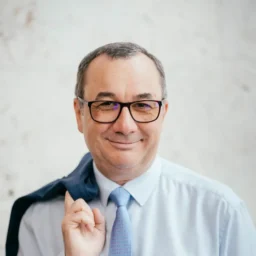
Prof. Liviu Matei
King´s College London (UK)Can universities help to address the crisis in democracy?
The keynote asks whether universities can and should actively remedy the democratic crisis. It briefly reviews major positions—from advocates who see defending democracy as a university duty to critics warning against politicisation—and supplies a critical
inventory of actions: civic education, curricular and digital initiatives, research, advocacy and public engagement models. It evaluates recent efforts to reconceptualise and codify anew academic freedom and considers how such reforms enable or constrain universities’ democratic contributions.
CV:
Liviu Matei is a higher education scholar, educator, and university leader. He is a Professor of Higher Education and Public Policy and Head of the School of Education, Communication and Society at King’s College London, where he also directs the Global Observatory on Academic Freedom.
He taught at universities in Europe, the U.S and Asia, consulted extensively in higher education and conducted applied policy research projects for international intergovernmental and non-governmental organizations, national public authorities and universities from Europe and Asia. His primary areas of expertise are university governance, academic freedom and university autonomy, funding, internationalization of higher education, quality assurance, and the history and politics of higher education.
He is Vice-President of the the Governing Council of Magna Charta Universitatum Observatory, a member of the Board of Trustees of the American University of Central Asia, and the Board of Governors of CHER- the Consortium of Higher Education Researchers. He founded and directed the Yehuda Elkana Center for Higher Education and the Global Teaching Fellowships Program.
He led the project of developing a monitoring framework for the fundamental values of higher education (academic freedom, university autonomy, integrity, student and staff participation in governance, and responsibility for and of higher education), and currently leads the research team that is undertaking the first monitoring of these values in all but four European countries.